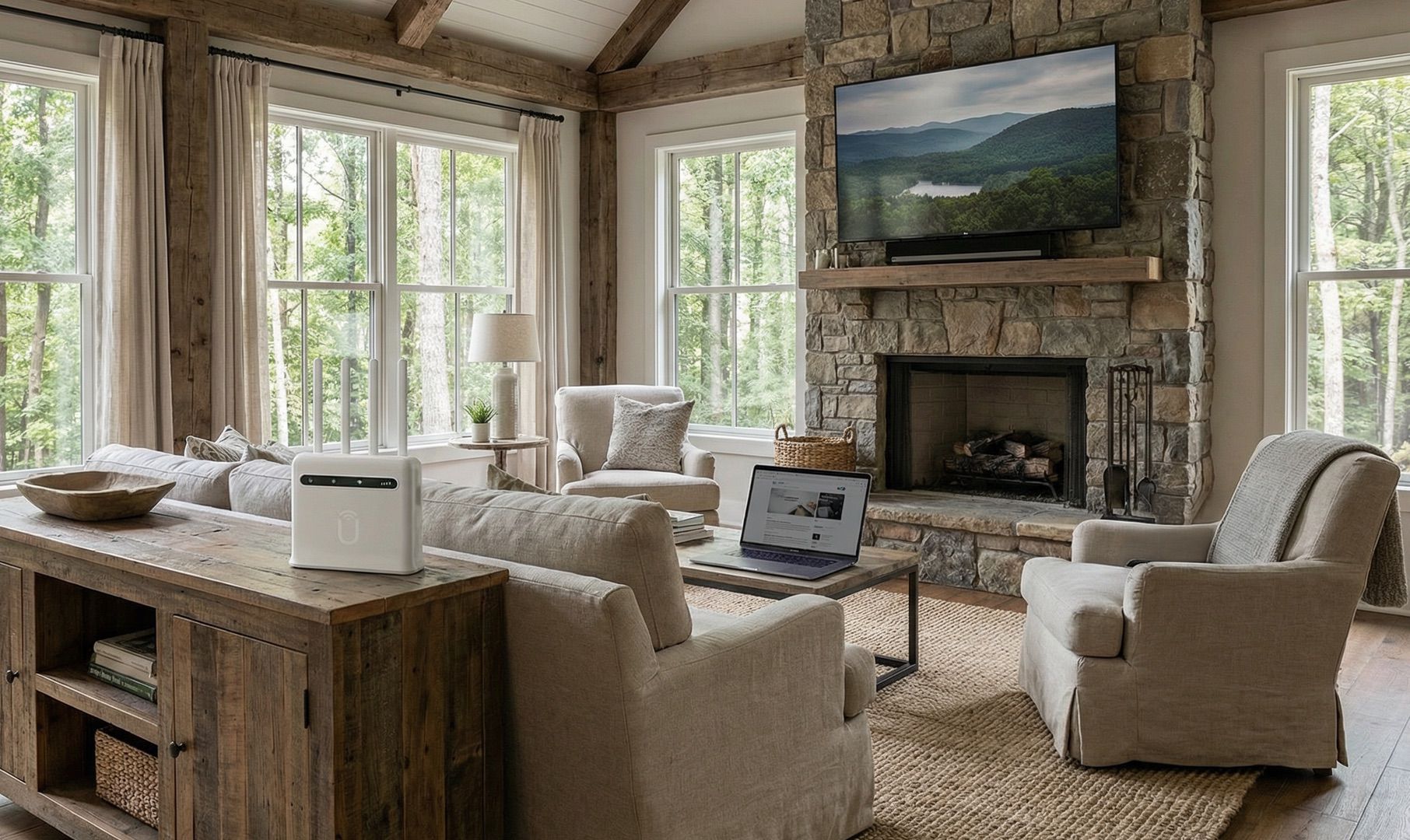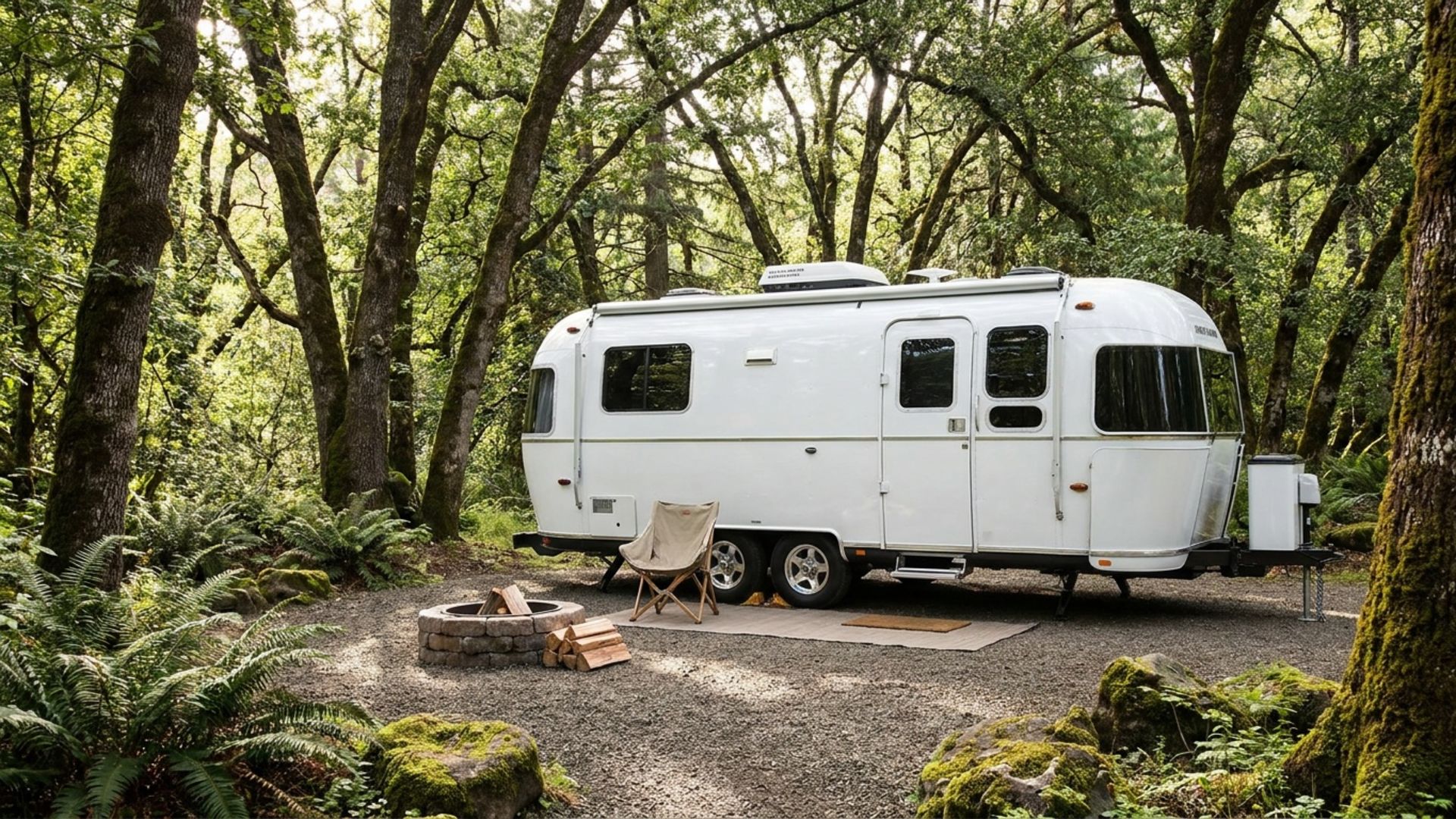
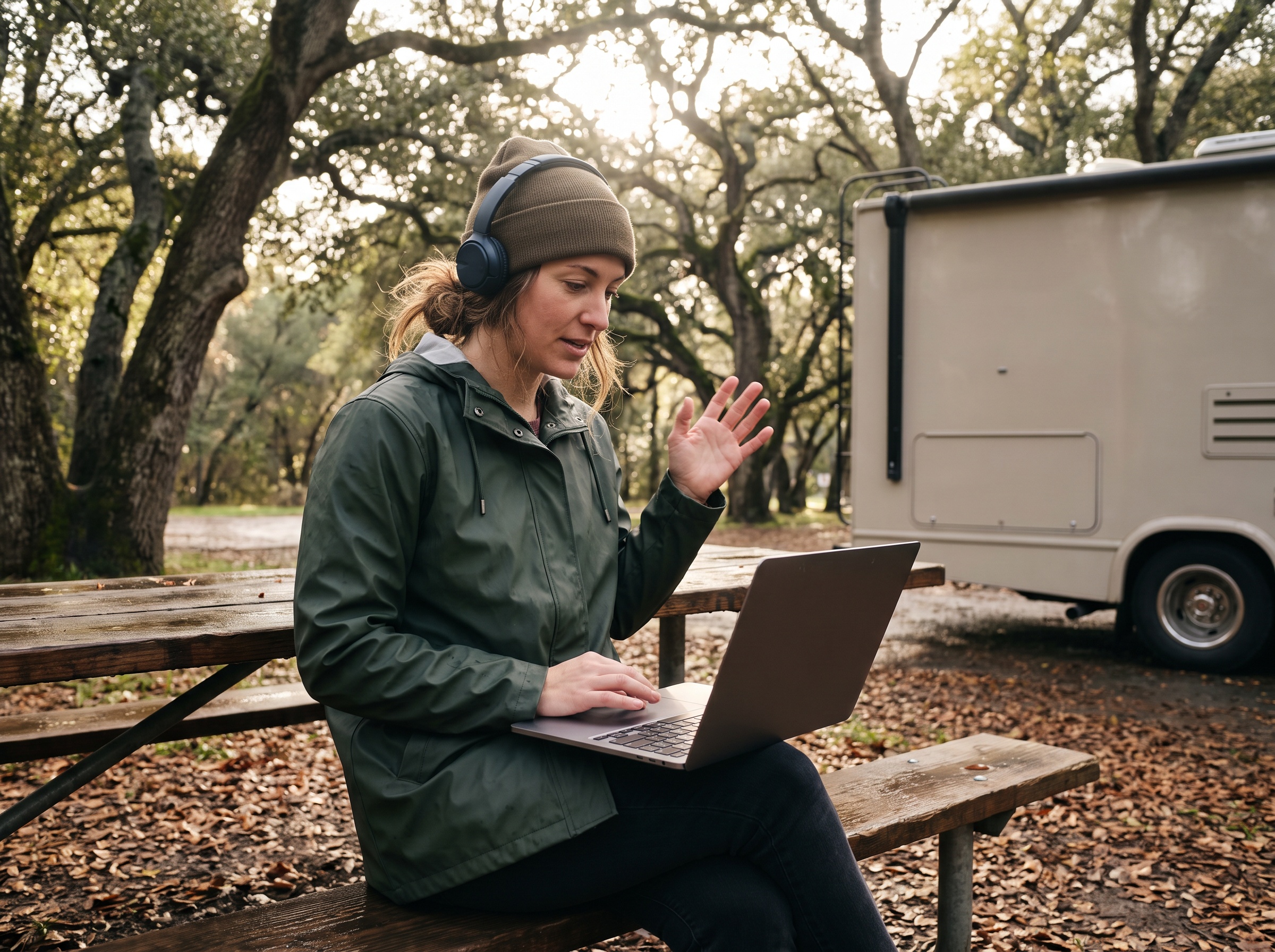
You booked the campsite with the big oaks and the privacy, and now your satellite dish keeps dropping out. Or you have a client call in twenty minutes and the campground WiFi is crawling because every rig on the loop is online.
Tree cover is the most common complaint RVers have about satellite internet, and it is where cellular internet quietly wins. This guide explains why, shows the real cost comparison, and tells you when Starlink is still the right call.
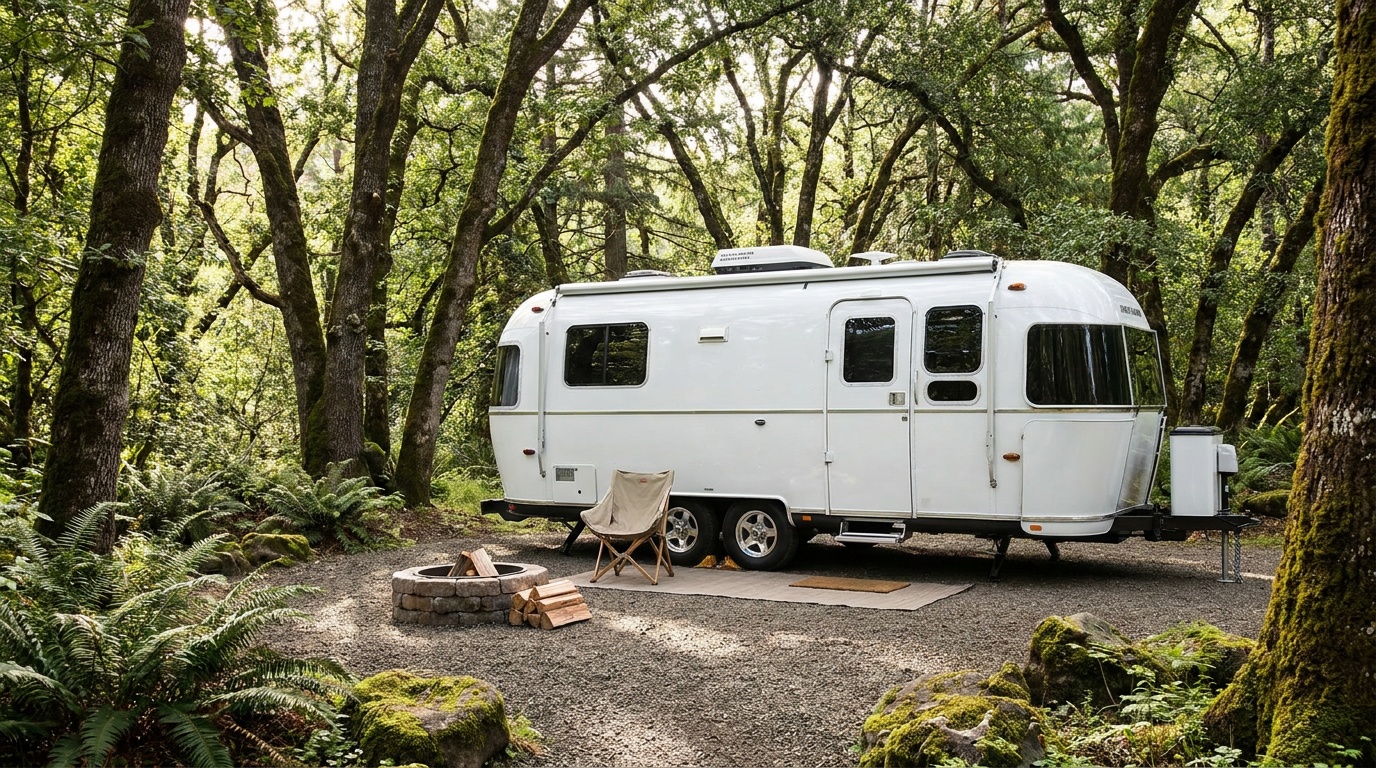
Why does Starlink struggle under trees?
Starlink needs a clear view of the sky. Trees, buildings and mountains can block the signal, and the Mobile Internet Resource Center's Starlink RV guide puts it plainly: the signal cannot pass through dense tree cover or a building. Current dishes see roughly a 110 degree cone of sky, so a single heavy branch in the wrong spot can cause drops.
Starlink's own help center guide to checking for obstructions tells owners to check for obstructions before they settle in and to move the dish or clear the obstruction when they can. That works well in a field. It works less well when the whole campsite is the obstruction.
RVers say the same thing in their own words. On the iRV2 forum, the dominant complaint in one long Starlink vs cellular thread was parking in shade: "love to park in shady areas" and Starlink "would be problematic." Another owner who camps in a national forest described the service as spotty and occasionally glitchy under tree cover, but acceptable.
What kind of internet works at a wooded RV campsite?
Cellular internet. A 4G LTE or 5G signal comes from a tower, not a satellite, so it does not need a view of the sky. Winnebago says cellular "often works better than Starlink in wooded areas, downtown environments, or RV parks," and lists lower power use and no clear-sky requirement as advantages.
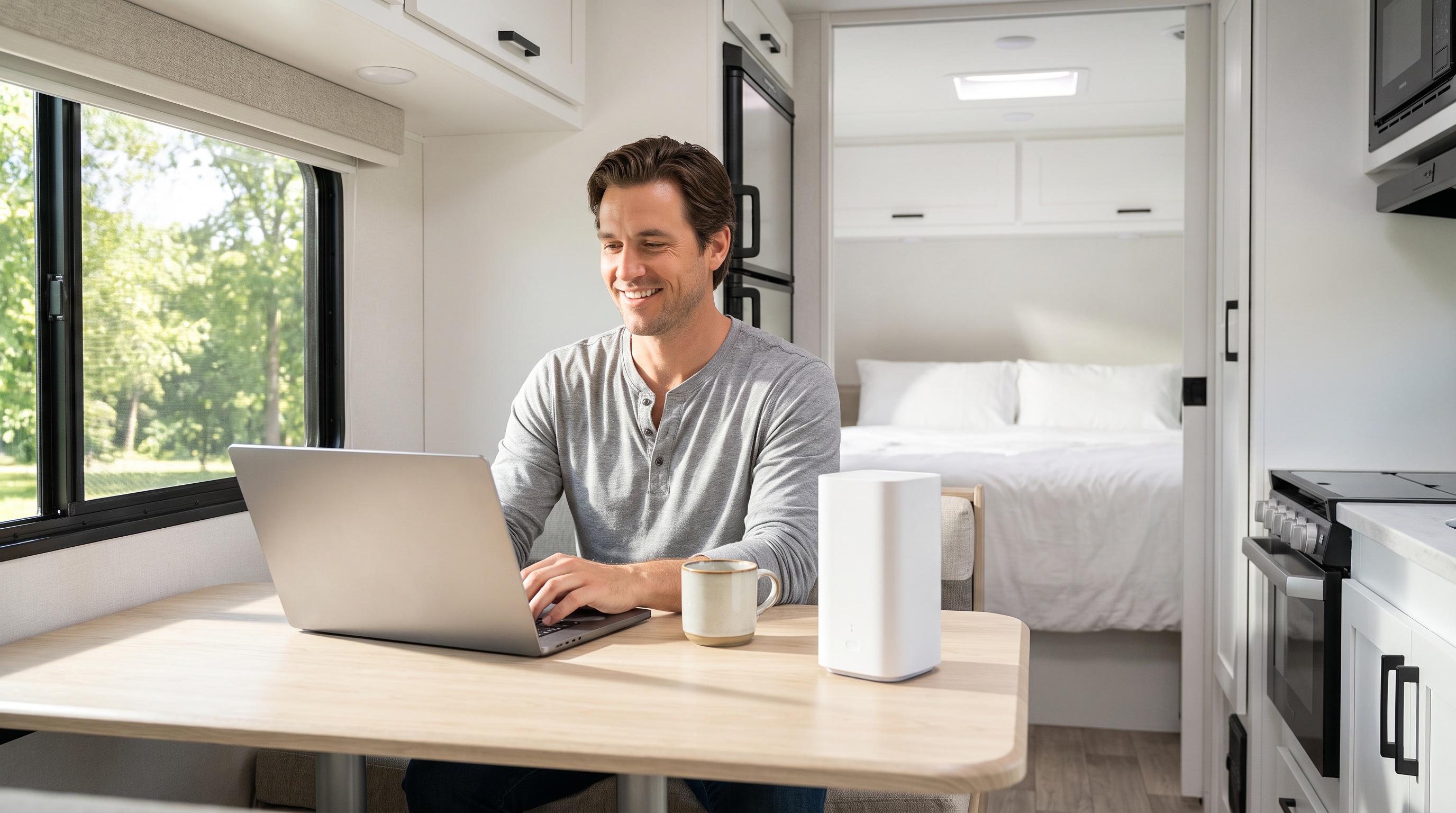
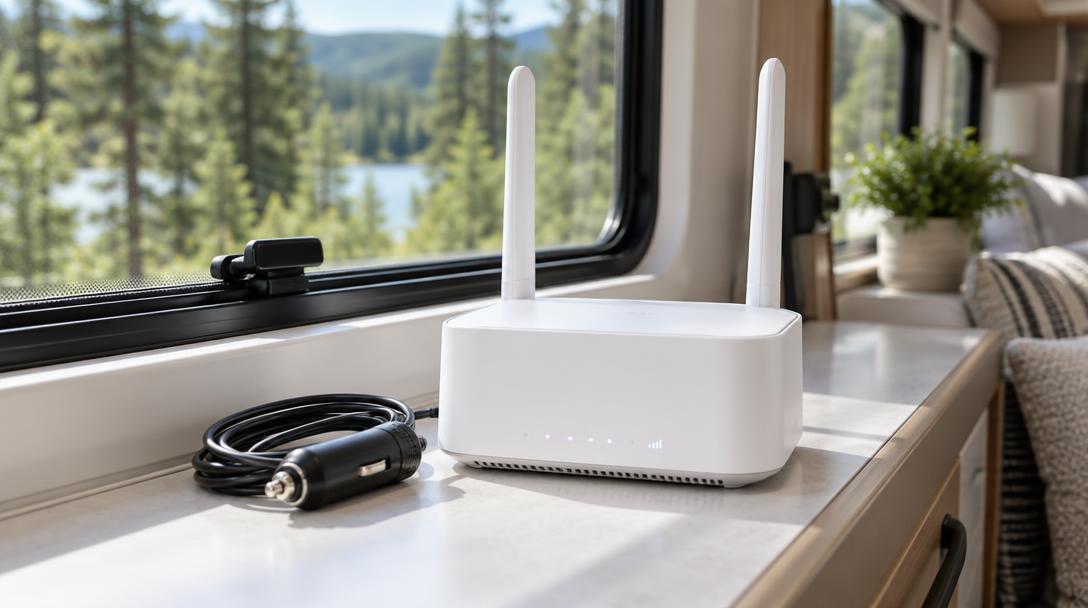
That is the use case a plug-in 4G/5G router was built for. You set it down inside the RV, plug it in, and it connects to whatever cell signal reaches the site. No dish on the roof, no pole on the hitch, no walking around the campsite looking for a gap in the leaves.
Starlink vs cellular for a shady campsite: how do they compare?
Here is the comparison for the situations RVers actually run into. Starlink Roam prices are the current published rates reported by the Mobile Internet Resource Center; Unlimitedville prices are from the plans page.
| Situation | Starlink Roam | Unlimitedville 4G/5G plan |
|---|---|---|
| Wooded or shady campsite | Trees block the signal; you may have to move the dish into the open | Cell signal does not need a view of the sky |
| Open site with no cell service | Works with a clear view of the sky | No cell signal means no service |
| Setup | Dish placed with a clear view, then checked for obstructions in the app | Plug in the router, about 5 minutes, no exterior hardware |
| Monthly price | Roam 100 GB $55, Roam 300 GB $80, Roam Unlimited $175 | 4G Plus $99 or 5G Ultra $119, both unlimited |
| Data limits | Capped on the 100 GB and 300 GB plans | No data caps |
| Power | Generally draws more than a cellular router | Runs on 12v DC or 110v AC |
| Upfront cost | You buy the dish | $99 one-time activation; equipment stays company property |
When is Starlink still the better choice?
Starlink wins when there is no cell service at all. If you spend most of your time on open BLM land, in desert pullouts, or in the kind of backcountry where no carrier reaches, a dish with a clear view of the sky will connect where a cellular router cannot. Unlimitedville's own RV page says coverage in extremely remote wilderness areas may be limited, and that is true of every cellular product.
It also wins if you want one connection that works in motion and across borders under its Roam plans, and you are comfortable with the price. Starlink raised Roam Unlimited to $175 a month in 2026, and existing customers saw the increase starting with their next billing cycle on or after June 18, 2026, according to the Mobile Internet Resource Center.
The honest rule: if your campsites are open and remote, buy satellite. If your campsites are shady, wooded, or within reach of a tower, cellular is cheaper, simpler and more likely to work.
Is campground WiFi good enough to work from?
Sometimes, and you should not bet a deadline on it. Campground WiFi is shared by every camper on the loop, so it slows down when everyone is online, usually in the evening. RVers on forums describe it as inconsistent from park to park.
A private connection of your own avoids that. Your router creates its own network that nobody else at the campground is sharing, which matters when you are on video calls, uploading files, or streaming at night.
How do you test internet at an RV site before you commit?
Do this before you book a month at a wooded park or buy a connection for it:
- Check mobile coverage at the campground address on the FCC National Broadband Map, then confirm with the people who camped there last.
- Look at the canopy overhead. If you can barely see sky from the picnic table, plan on cellular.
- Check bars on more than one carrier if you can. A site that is weak on one carrier can be fine on another.
- Test during the evening peak, not at 10 a.m. Campground loads show up when everyone gets home.
- Pick a plan with no data cap so a month of work and video does not hit a limit halfway through.
How does Unlimitedville work in an RV?
Unlimitedville sells membership-based 4G LTE and 5G internet with no data caps. The router ships in 24 hours, setup takes about 5 minutes, and it runs on both 12v DC and 110v AC, so you can power it from the RV's electrical system. It has built-in antennas, so there is nothing to mount outside, and the 5G Ultra router is IP65 weatherproof if you want to set it outdoors.
Because there is no service address, the same account works at a campsite this week, at home next month, and at a second property later. If you split the year between two places, see how that plays out in our guide to internet for snowbirds, and if you work from a truck rather than a trailer, read unlimited internet for truck drivers.
There is a 21-day money-back guarantee that covers the first month, the activation fee and original shipping if the service does not meet your needs after the equipment is delivered. That is how you test it under your own trees instead of trusting a coverage map. If you are weighing it directly against a dish, the Unlimitedville vs Starlink page and the Starlink vs 4G/5G comparison go deeper.
Do you need both Starlink and cellular?
Plenty of full-timers run both. Winnebago suggests using Starlink for remote locations and heavy tasks, then falling back on cellular when you are under trees, in cities, or conserving power. That is a good setup if your travel mixes open backcountry with shaded campgrounds.
If you only want to pay for one, choose by where you actually camp. Mostly state parks, national forests and sites near towns means cellular. Mostly open, empty land far from any tower means satellite. You can see what is available where you travel on the coverage page, and the RV internet page covers the hardware.
Frequently asked questions
Does Starlink work under trees?
Not reliably. Starlink needs a clear view of the sky, and dense tree cover blocks the signal. Starlink's own help center walks owners through checking for obstructions and moving the dish. RVers who camp in forests report service that is spotty and occasionally glitchy under partial cover.
What is the best internet for an RV parked in the woods?
A cellular-based connection, because a cell signal does not need a view of the sky. Winnebago notes that cellular often works better than Starlink in wooded areas and RV parks. Choose a plan with no data cap and confirm there is a signal at the site first.
Can I use cellular internet at a state park or national forest campground?
Often yes, but it depends on the coverage at that exact site. Tree cover does not stop a cellular signal the way it stops a satellite, but remote parks can have weak or no service. Check coverage before you go, and use a plan with a money-back window so you can test it for real.
Do I need to install an antenna or mount on my RV?
Not with Unlimitedville. The routers have built-in antennas and need no exterior hardware, and setup takes about 5 minutes. The 5G Ultra router is IP65 weatherproof if you want to place it outdoors.
Is campground WiFi good enough to work from?
Often it is not. Campground WiFi is shared by everyone on the loop and tends to slow down in the evening. Treat it as a bonus and use your own connection for calls and deadlines.
Should I get both Starlink and a cellular plan?
If you camp both in open backcountry and in shaded campgrounds, many RVers use both. If you mostly camp near towns or under trees, cellular alone is usually enough and costs less than Starlink Roam Unlimited at $175 a month.
Test it under your own trees
Don't let a tree decide whether you can work. Unlimitedville ships in 24 hours, sets up in about 5 minutes, has no data caps, and comes with a 21-day money-back guarantee, so you can test it at your own campsite. See plans or check coverage before your next trip.