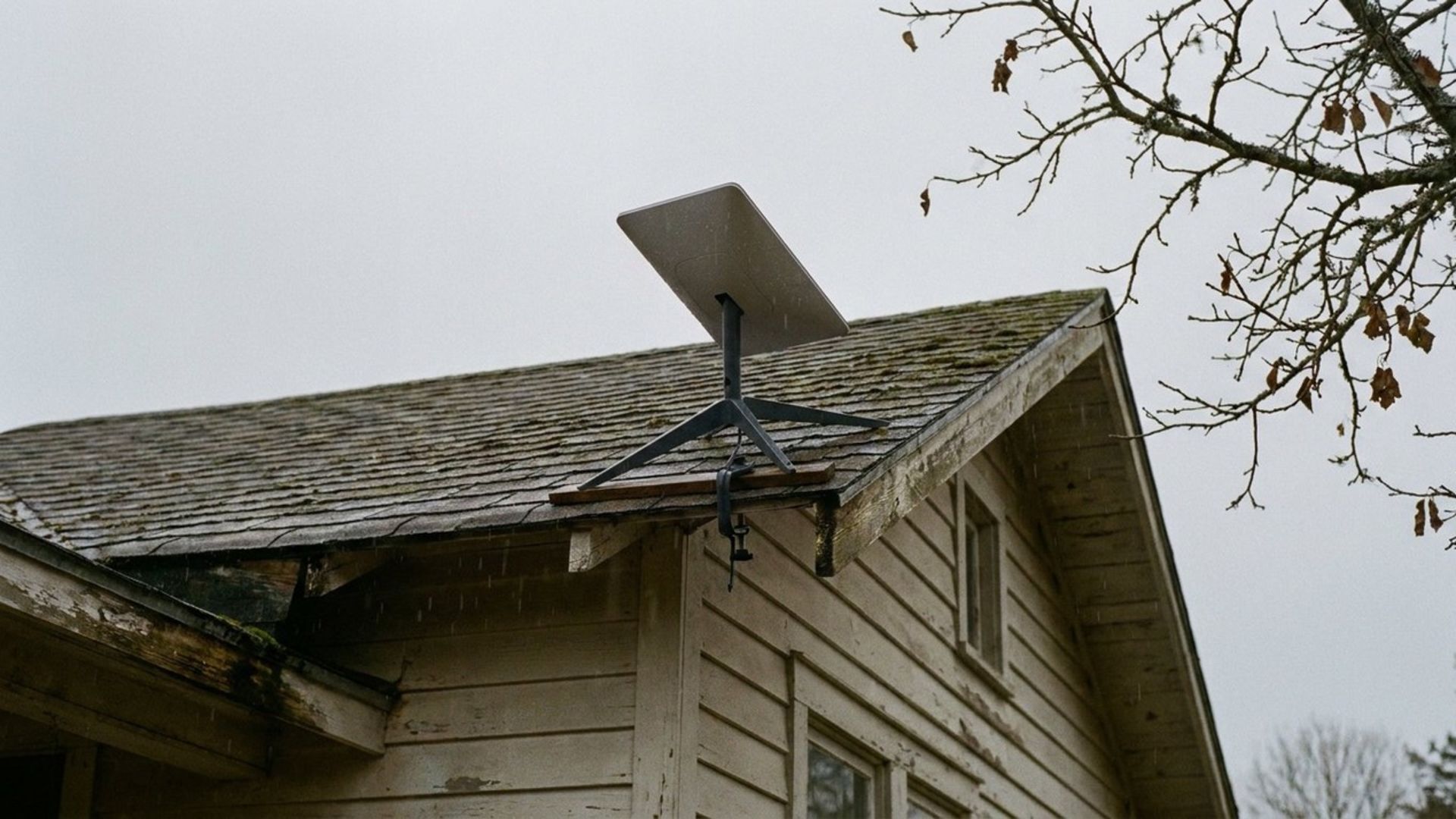
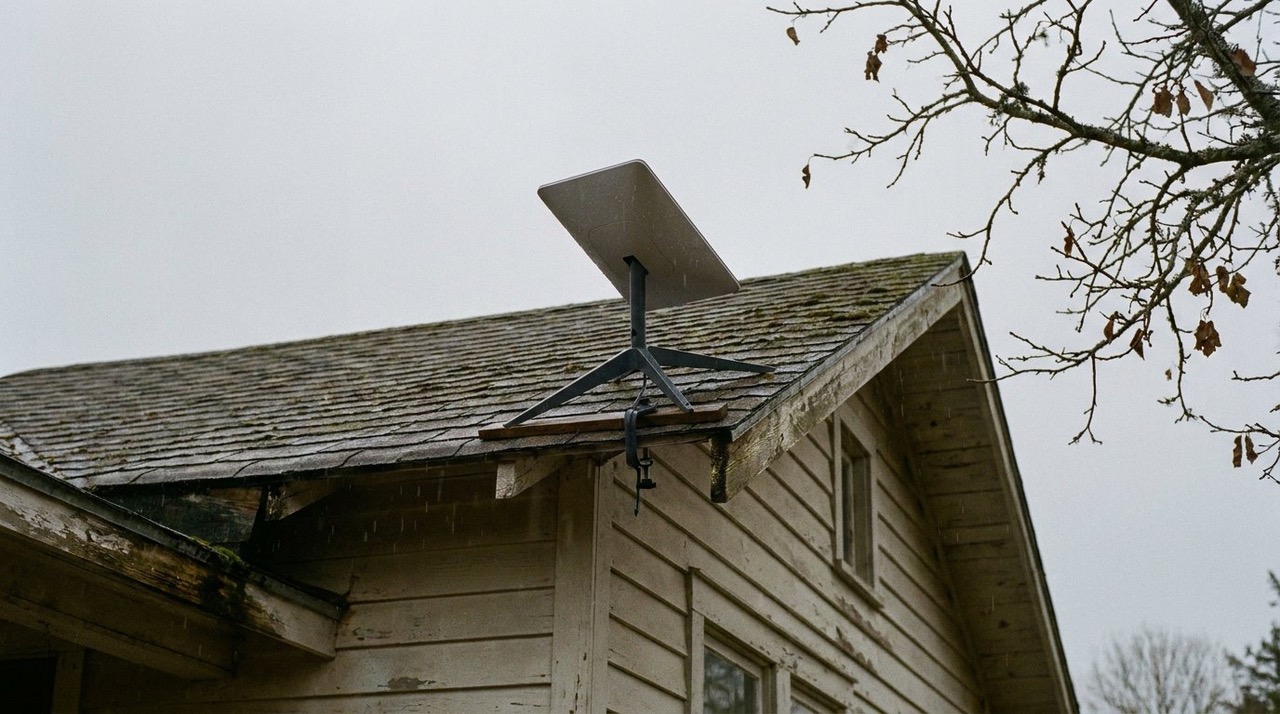
Imagine signing up for internet, or just verifying the address you have used for three years, and getting hit with a surprise one-time fee of $1,500. No new equipment. No plan upgrade. Just a charge for living where you live.
That is exactly what a growing number of Starlink customers are running into in 2026. SpaceX has been quietly adding “demand surcharges” of anywhere from $100 to $1,500 to accounts in areas it considers high demand. The reason, according to Starlink’s own support page, comes down to network capacity: too many people are trying to use the service in the same place at the same time.
If you rely on Starlink, or you are shopping for rural internet and weighing it against other options, this is worth understanding before you commit. Here is what the demand surcharge actually is, why it is happening, who gets hit, and what your alternatives look like. We will be fair about where Starlink still makes sense, because the goal here is to help you make a good decision, not to talk you into anything.
What Is a Starlink Demand Surcharge?
A demand surcharge is a one-time fee Starlink adds to certain accounts based on your service address. It is separate from your monthly bill and separate from the cost of the dish. Think of it as a surcharge for connecting in a region where the network is already stretched thin.
The fee is tied to location, not usage. If your address sits inside what Starlink flags as a high-demand area, the surcharge can appear when you sign up, reactivate service, verify your address, or move your equipment into that area. According to Starlink’s support documentation, moving from a high-demand area to a normal one will not trigger a charge. Moving the other direction will, and the amount is “based on current network capacity.”
The number has climbed fast. Here is how it has grown, based on reporting from PCMag and independent internet-research sites:
| Time Period | Typical Demand Surcharge | Notes |
|---|---|---|
| 2024 | Around $100 (one-time) | Introduced quietly as a “congestion charge” in limited areas |
| June 2025 | Up to $1,000 | Expanded to parts of several states |
| Mid-2026 | Up to $1,500 | Highest fees now appearing in parts of Alaska; some areas like the Pacific Northwest have dropped to around $500 |
So in roughly two years, the top-end fee has grown from $100 to $1,500. It moves in both directions as capacity changes, which is part of what makes it hard to plan around.
Why Is This Happening?
The short version: Starlink is a shared network, and in popular areas there is only so much capacity to go around.

Every Starlink dish talks to satellites passing overhead, and each satellite can only handle so much traffic from any given patch of ground. When too many subscribers cluster in the same region, everyone’s speeds suffer during busy hours. The demand surcharge is SpaceX’s way of discouraging new sign-ups in those crowded areas and putting a price on the capacity crunch.
Industry analysts expect the surcharge to stick around in congested regions until SpaceX launches enough newer, higher-capacity satellites to relieve the load. In other words, this is not a temporary billing quirk. It is a symptom of a satellite network trying to serve more customers than its current capacity comfortably supports in certain places.
It is also worth being fair here: SpaceX frames the fee as a legitimate capacity-management tool, not a random cash grab. And in at least some cases, customers who were charged in error, because of a glitch in the automated system that reads their coordinates, did eventually get refunded. The problem for customers is less the existence of a capacity fee and more the size of it, the lack of warning, and how hard it can be to dispute.
Who Gets Hit With the Fee
The surcharge tends to catch people off guard because it does not always require doing anything new. Based on customer reports collected by TechDirt and posted across Reddit and social media, the fee has shown up for:
- New customers signing up at a high-demand address
- Long-time customers who were simply asked to verify an existing address
- Travelers and RV users whose location was flagged as high demand
- Customers replacing or reactivating a dish in a congested area One customer described being charged $1,500 just for verifying an address they had used for three years, then spending five days getting passed between support agents without resolution. Another traveler using a residential plan in an RV got hit with a $500 surcharge with no notification, and was told the fee could not simply be removed. The common thread is that the charge is automated and location-driven. You do not get to opt out of the area you live in, and the system does not always warn you before the fee lands.
The Customer Service Problem
The surcharge would sting less if it were easy to contest. By many accounts, it is not.
Customers trying to dispute the fee describe getting bounced from agent to agent, waiting days for answers, and hitting what one observer called a “black hole” of support. Starlink is known for keeping customer-service costs low, which works fine when nothing goes wrong, but becomes a real problem when you are staring at a four-figure charge you did not expect and cannot easily challenge.
Even in the case we mentioned where a customer was eventually refunded, the fix came only after a representative dug in and found that the automated system had misread the account’s latitude and longitude. Not everyone has the time or persistence to push a dispute that far.
Monthly Prices Are Creeping Up Too
The surcharge is not happening in a vacuum. Starlink’s monthly rates have also been edging upward, which makes the one-time fee an even harder pill to swallow.
The underlying dynamic is simple, and a former Nebraska state senator summed it up bluntly when talking to the Washington Post about rural service: once a provider has rural customers locked in with no meaningful alternative, it is free to raise prices at will. That is the risk of depending on a single option. When there is no competition at your address, there is little holding pricing in check.
This is the part that matters most if you are making a decision today. The question is not just “what does Starlink cost right now.” It is “what leverage do I have if the price keeps climbing.” And that depends entirely on whether you have another way to get online.
What This Means If You Are Shopping for Rural Internet
Here is the honest framing.
If you live in a true dead zone, somewhere with no usable cell signal at all, deep in the woods, in a mountain valley, or far off the grid, Starlink may still be your best or only path to real broadband. In that situation, even a steep surcharge can be worth paying, because the alternative is dial-up-era speeds or nothing. We have said before that Starlink genuinely wins in those spots, and that has not changed.
But most rural addresses are not true dead zones. A large share of people who assume satellite is their only choice actually have workable 4G or 5G cell signal at their home, and that opens up a very different option: cellular home internet. It runs on the same ground-based towers that serve your phone, and critically, it does not carry a location-based demand surcharge.
That distinction is the whole point of this article. The surcharge is a satellite-capacity problem. If your internet is not coming from a satellite, the problem does not apply to you.
How Cellular Home Internet Avoids the Surcharge Problem
Cellular home internet works differently in the exact ways that matter here.
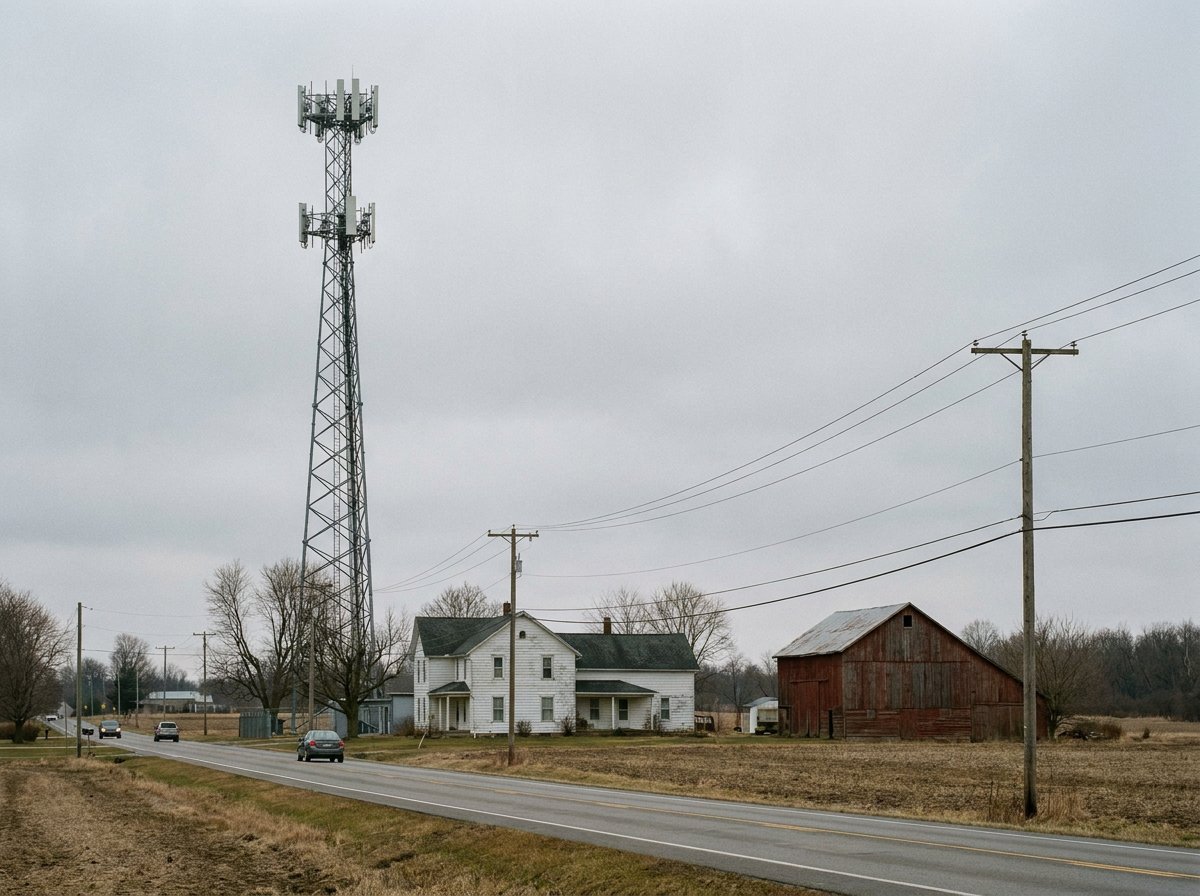
There is no demand surcharge tied to your address. You pay a flat monthly rate for your plan, and that is the price. Your bill does not jump because your ZIP code got popular or because an automated system re-read your coordinates.
Pricing is transparent and predictable. With Unlimitedville, plans run from $99 per month for the 4G Plus plan up to $109 per month for 5G Ultra. There is no four-figure fee waiting at signup, no equipment you have to buy outright, and no penalty for verifying your own address.
And you can try it without risk. Unlimitedville offers a 21-day money-back guarantee, so you can test real performance at your actual home, under your real usage, before you are locked into anything. If it does not deliver for your address, you send the kit back. That is a very different proposition than sinking money into a satellite dish plus a surprise surcharge and then fighting to get any of it back.
For a fuller side-by-side on speed, latency, and reliability, see our deeper comparison: Starlink vs. 4G/5G Home Internet: Which Is Actually Better in 2026?
How to Check Before You Commit
You do not have to guess. A few minutes of testing will tell you most of what you need to know.
- Test your cell signal. Step outside at home with your phone, run a free speed test, and note your signal bars. Strong 4G or 5G signal is a good sign that cellular home internet will work well at your address.
- Check the Starlink surcharge for your address. If you are still considering Starlink, run through its sign-up flow far enough to see whether a demand surcharge appears for your location before you buy anything.
- Try the low-risk option first. If you have decent cell coverage, cellular home internet is cheaper, simpler to set up, and carries no location surcharge. A money-back guarantee lets you confirm it works before committing. You can see what plans are available for your area on the Unlimitedville plans page, or check coverage for your address on the Unlimitedville availability page.
The Bottom Line
Starlink’s demand surcharge is not a scandal so much as a warning sign. It tells you that satellite capacity is finite, that popular areas are getting squeezed, and that a provider with no competition at your address has room to keep raising what you pay, whether through a one-time fee or a creeping monthly rate.
If satellite is genuinely your only option, Starlink is still a legitimate service, and the surcharge may be a cost worth bearing. But if you have real cell signal where you live, you have leverage most rural customers assume they do not have. Cellular home internet gives you predictable pricing, no location-based surcharge, and a way to test before you buy.
The best internet is the one that works reliably at a price you can count on. Before you accept a $1,500 surprise, it is worth finding out whether you even need to.
—--
Sources and further reading: Futurism, PCMag on the surcharge’s origin and growth, and Starlink’s own demand surcharge support page.