If you live outside a metro area, finding reliable high-speed internet can feel like solving a puzzle with half the pieces missing. Your rural neighbors might have completely different options than you do. One person has access to fiber arriving in six months. Another has nothing but satellite. A third one just got cellular home internet and regrets not switching years ago.
The good news: 2026 has more best rural internet options than any year before. Whether you're in the mountains of Colorado, the farmland of Iowa, or the backroads of Appalachia, you likely have more choices than you realize. Some will be faster. Some will be cheaper. Some will actually work.
This guide covers every type of rural internet available right now, what it costs, how fast it is, and who it's best for. We'll skip the sales talk and focus on what actually matters: whether it can handle your work, your streaming, and your life outside the city.
The 6 Types of Rural Internet Available in 2026
Rural internet isn't one thing. It comes from six fundamentally different technologies, each with its own strengths and weaknesses. Some have been around for decades. Others have arrived only in the last few years.
Understanding the difference between these six types is the key to finding what works for your address. You might live in an area where all six are theoretically available. You might live in an area where only one is. The better you understand how each one works and what it's actually capable of, the better decision you can make.
We'll cover DSL, traditional satellite, LEO satellite (Starlink), fixed wireless, 5G/4G cellular home internet, and cellular hotspots. Each section includes what to expect for speeds, cost, and real-world performance, along with which providers deliver each type.
DSL Internet
DSL is the internet connection your parents probably had. It runs data over the same copper telephone lines that have been in the ground since the 1970s. In some rural areas, it's still the default option. In others, it barely exists anymore.
How does it work? The phone company runs a copper line to your home. At the other end of that line is a piece of equipment called a DSLAM. The closer you are to the DSLAM, the faster your speeds. The farther you are, the slower they get. Beyond about two miles, DSL often becomes unusable.
You can typically expect between 1 and 100 Mbps for download speeds, with most rural DSL customers seeing 10 to 25 Mbps. Upload speeds are usually terrible, somewhere in the 1 to 5 Mbps range. For that, you're usually paying between $30 and $60 per month. Data caps are rare with DSL, which is one of its advantages.
DSL was fast for rural internet in 2010. In 2026, it's aging infrastructure that the phone companies have mostly stopped investing in. CenturyLink (now Lumen), AT&T, Windstream, and various local telephone cooperatives still offer it, but the writing is on the wall. These companies are putting their money into fiber and wireless, not copper lines.
The real advantages of DSL are simple: it's widely available if you have a phone line, and it's cheap. The real disadvantages are that your speeds will degrade if you're far from the equipment, upload speeds are consistently awful, and you can't expect improvements. The infrastructure isn't being upgraded. It's being retired.
If you have DSL and it's giving you 15 Mbps or better, and you're mostly browsing and emailing, it works. If you're trying to work from home, stream video, or do anything that requires upload speed, DSL is probably not enough. And you shouldn't expect it to get better. Plan for something else instead.
Traditional Satellite Internet (HughesNet, Viasat)
Traditional satellite internet has been the fallback option for rural internet for over 20 years. If you couldn't get DSL or cable, you could always get satellite. It works almost everywhere. It's why HughesNet and Viasat became household names in rural America.
These satellites sit about 22,000 miles above Earth in geostationary orbit. That distance creates a problem: latency. The signal has to travel 22,000 miles up and 22,000 miles back down. That's over 40,000 miles round trip. At the speed of light, that still takes about 600 milliseconds. For comparison, land-based internet usually has latency under 50 milliseconds. That 550-millisecond difference means video calls stutter, games feel unresponsive, and certain applications simply don't work.
Download speeds have gotten better over the years. You can expect between 25 and 150 Mbps from traditional satellite providers now. But those speeds often come with painful data caps. Use up your data cap partway through the month, and your speed gets throttled down to 3 or 5 Mbps. Even providers that claim "unlimited" will slow you down if you use too much.
The monthly cost runs between $50 and $150 depending on the speed tier. On top of that, you're paying for equipment installation and often needing to buy or rent a modem. Weather also matters. Heavy rain and snow can degrade your signal temporarily.
Traditional satellite still has one genuine advantage: availability. If you have a clear sky view and nothing else available, you can get internet almost anywhere. But for everything else, it's been surpassed. The technology is decades old. The pricing is high for what you get. And the latency is a constant problem.
If you have better options (which most people do in 2026), explore those first. If traditional satellite is truly your only option and you have an unobstructed southern sky view, it works. But don't settle for it if you have alternatives.
LEO Satellite Internet (Starlink)
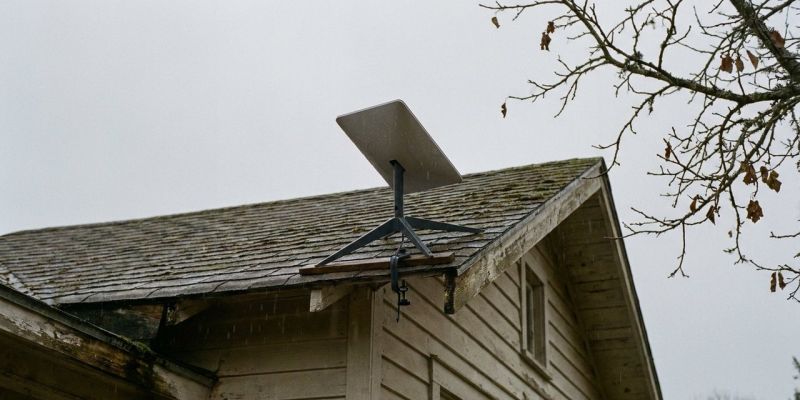
Starlink is the new satellite internet, and it works almost completely differently from the traditional kind. Instead of satellites way up in geostationary orbit, Starlink uses satellites in low Earth orbit, much closer to you. We're talking 340 miles up instead of 22,000 miles.
That closeness changes everything. The latency drops from 600 milliseconds down to somewhere between 25 and 60 milliseconds. Suddenly, video calls work smoothly. Gaming becomes viable. Your internet feels responsive instead of sluggish.
The speeds are decent too. Starlink advertises speeds up to 200 Mbps, though real-world median speeds from Ookla data are around 67 Mbps. That's good enough for video streaming, remote work, and most of what modern internet needs to handle.
The price is $120 per month for the standard tier. On top of that, you need to buy the equipment (the dish, the router, and the cables), which runs about $349 upfront. There's no monthly equipment fee, which is different from traditional satellite. That equipment is what you own.
Starlink does have real limitations. It needs a clear view of the southern sky. Trees, hills, buildings, or even heavy cloud cover can degrade your signal. In wet, snowy climates, performance drops during storms. And the speeds have decreased noticeably over the past couple of years as more users have joined the network. If Starlink seemed fast in 2023, it's slower in 2026.
But for someone in a truly remote location with no cell signal and no other options, Starlink is still the best high-speed internet available. You need clear sky space on your roof or property, but if you have that, it works.
For a deeper comparison of how Starlink stacks up against cellular home internet, check our article: Starlink vs. 4G/5G Home Internet.
Fixed Wireless Internet
Fixed wireless internet comes from small internet service providers called WISPs. These are local or regional companies that build towers and beam internet signal to an antenna mounted on your home. The technology is basically the same as what powers cellular networks, but dedicated to a single ISP rather than shared among multiple carriers.
If a WISP has invested in coverage near you, fixed wireless can be a really good option. Speeds typically range from 25 to 100 Mbps. The cost is usually $40 to $80 per month, competitive with cellular and often cheaper than satellite.
The advantage of fixed wireless is that it's often better than DSL without costing more, and you get local support from people who know your area. WISPs have grown more professionally run over the past decade. Many offer good customer service.
The disadvantage is availability and consistency. You need a line of sight to the WISP's tower, which isn't always possible if you have trees or hills between you and them. Speeds vary wildly depending on which WISP you're looking at and how congested their network is. One WISP might give you reliable 50 Mbps. Another might give you inconsistent 20 to 60 Mbps that's frustrating to use.
Finding a WISP that serves your area requires a bit of legwork. Your best bet is to search for "fixed wireless internet [your county name]" or check broadbandnow.com and enter your address. If a WISP is available and you're willing to try them, it's worth a test. Many offer trial periods.
5G/4G Cellular Home Internet
Cellular home internet is the newest major category of rural internet. It's also the one that's most misunderstood. The idea is simple: instead of running a cable to your home, a provider sends a 5G or 4G signal to a small router in your house. That router gives you Wi-Fi throughout your home. It's the same technology that powers your cell phone, but in a dedicated box designed to handle home internet usage.
There are two flavors of this. The first is carrier-direct service, offered by T-Mobile and Verizon. T-Mobile 5G Home Internet costs $50 per month and comes with a free router. Verizon 5G Home Internet costs $35 to $60 per month depending on your location. These are cheap, and they work well if they're available at your address. The problem is they're only available in specific areas where the carriers have decided to offer them, and many areas have waitlists months long.
The second flavor is cellular ISPs like Unlimitedville, Nomad Internet, and UbiFi. These companies use the same underlying cell networks (T-Mobile, Verizon, AT&T), but they've partnered with the carriers to offer service at more addresses. Unlimitedville, for example, uses T-Mobile's network and offers plans starting at $69 per month. Because they work with the carriers rather than being owned by them, they can offer service in places where T-Mobile Home Internet isn't officially available. Unlimitedville's plans also come with truly unlimited data and no throttling, which is different from some carrier-direct offerings that have soft data caps and speed reductions.
Typical speeds for cellular home internet range from 25 to 300 Mbps depending on how close you are to the cell tower and how congested it is. Latency is excellent, usually between 20 and 50 milliseconds. That makes video calls smooth, gaming viable, and VPN usage fast.
The advantages are substantial. Setup takes minutes, not hours. You plug in the router and you're done. No technician visit. No digging up your property. No waiting weeks for installation. There are no long contracts with most cellular ISPs. You're not locked in. If it doesn't work, you can cancel and try something else. And if you move, you take the router with you.
The disadvantages are location-dependent. If your home doesn't have good cell signal, cellular internet won't work well. The quality depends on cell tower proximity and network congestion. On a congested tower, speeds can drop significantly during peak hours. In areas with true dead zones, it simply won't work.
But for the majority of rural homes that have at least decent cell signal, cellular home internet is the fastest, cheapest, and easiest option available right now. It's the reason Starlink adoption has slowed in 2026. It's the reason DSL is dying even faster. For most people, cellular works better and costs less.
How to Choose the Right Option for Your Home
Knowing what's available is half the battle. The other half is figuring out which option makes sense for your specific situation. Not all rural homes are the same, and not all rural internet needs are the same.
Start with a simple check: do you have cell signal at your home? Walk outside and check your phone. If you have at least two or three bars of signal, cellular home internet should work for you. If you have one bar or no bars, move to the next step.
Next, check coverage maps for what's available at your address. Use these tools: the T-Mobile 5G Home Internet availability map, the Starlink satellite coverage map, your local carrier's coverage map, and broadbandnow.com to search for fixed wireless providers in your area. You can usually check these without entering your exact address if you prefer.
Once you know what's available, use this decision table:
| Your Situation | Best Option | Why |
|---|---|---|
| Strong cell signal at home | 4G/5G cellular home internet | Best value, low latency, easy setup, no contracts needed |
| Weak cell signal, clear southern sky view | Starlink | Only realistic option for reliable high-speed in true dead zones |
| Local fixed wireless provider available | Fixed wireless | Worth trying, often good speeds and local support |
| Only DSL available, under 25 Mbps | Cellular home internet or Starlink | DSL at those speeds can't reliably support video or remote work |
| Multiple options available | Cellular home internet (if signal is decent) | Usually offers the best combination of speed, cost, and reliability |
| Need backup internet for remote work | Cellular hotspot | Portable, reliable, gets around single-point-of-failure risk |
Don't just look at monthly price. Calculate total cost of ownership. Starlink is $120 per month plus $349 equipment. Cellular is $69 per month with no equipment cost. Over two years, that's $2,880 plus equipment for Starlink versus $1,656 for cellular. The cellular option costs less than Starlink's equipment alone.
Also think about trial periods. Any provider worth considering should let you test it before committing. Unlimitedville offers a 21-day money-back guarantee. Starlink has a 30-day return window. Fixed wireless providers often do trial periods. If a provider won't let you test it, that's a red flag.
What About Fiber? Is It Coming to Rural Areas?
Fiber internet is the gold standard. It's fast, reliable, low-latency, and doesn't depend on weather or tower proximity. If you can get fiber, you should. The problem is that fiber is still rare in truly rural areas.
The government has allocated billions of dollars through the BEAD program to expand broadband in rural areas, and much of that money is going toward fiber. The infrastructure is being built. But it's happening slowly. Most rural areas that are getting fiber in 2026 won't see it widespread until 2027 or 2028. Some won't see it until 2030.
If you know fiber is coming to your area within the next year or two, you might decide to wait. But if you need better internet now and you're being told "fiber is coming eventually," don't let that stop you from getting cellular or Starlink. Your internet needs are real. Fiber expansion is slow. And by the time fiber arrives, the technology you choose today will be outdated anyway.
A good strategy is to use cellular home internet or fixed wireless now, and switch to fiber when it arrives. Switching is easy. The money you spend on a temporary solution is money that gets you productive while you wait.
The Rural Internet Landscape in 2026
The rural internet landscape in 2026 is genuinely different from even three or four years ago. Starlink launched. Cellular home internet exploded from a niche product to a mainstream option. Fixed wireless providers multiplied. DSL stopped being good and started being obsolete.
You have real options now. More options than you probably realize. The key is matching the right technology to your location and your actual needs.
If you have cell signal at your address, a cellular home internet trial is the fastest way to find out if it can deliver the speeds you need. Unlimitedville offers a 21-day risk-free trial with no contracts, no equipment fees, and month-to-month plans. Try it. If it works, keep it. If it doesn't, cancel and try Starlink or a local fixed wireless provider.
The days of being stuck with whatever DSL speed you could get are over. The days of satellite's 600-millisecond latency being the only option are over. You have choices. Pick the one that actually works for you.
Still have questions about rural internet quality or performance? Check out our guide: Why Your Rural Internet Is So Slow.
Complete Comparison Table: All 6 Rural Internet Types
| Type | How It Works | Download Speeds | Upload Speeds | Latency | Monthly Cost | Equipment Cost | Data Caps | Availability | Best For |
|---|---|---|---|---|---|---|---|---|---|
| DSL | Data over copper phone lines | 1-100 Mbps (usually 10-25 rural) | 1-5 Mbps | 20-50ms | $30-60 | Often included | Usually none | Declining | Light usage if it's your only option |
| Traditional Satellite | Geostationary satellites at 22,000 miles | 25-150 Mbps | 1-10 Mbps | 600+ ms | $50-150 | $300-400 | Soft caps common | Virtually everywhere | True fallback only |
| LEO Satellite (Starlink) | Low-earth orbit satellites at 340 miles | Up to 200 Mbps (median ~67) | 5-20 Mbps | 25-60ms | $120 | $349 | None | Clear southern sky | Truly remote locations with no cell signal |
| Fixed Wireless | Local WISP tower to home antenna | 25-100 Mbps | 5-25 Mbps | 20-50ms | $40-80 | $100-200 | Usually none | Growing but limited | Rural areas with WISP coverage |
| 4G/5G Cellular Home | Cell signal to home router | 25-300+ Mbps | 10-50+ Mbps | 20-50ms | $35-120 | $0-400 | Optional (unlimited available) | Good cell signal areas | Most rural homes with adequate signal |
| Cellular Hotspot | Mobile hotspot on carrier plan | 5-150 Mbps | 2-50 Mbps | 20-50ms | $35-80 | $0-500 | Often capped | Good cell signal | Backup internet, mobile usage |
Last updated: March 2026. Rural internet options and pricing change frequently. Check availability at your specific address before committing to any service.